Your readers mostly know you as a writer and a storyteller. How did your relationship with the sea and sailing begin? What was the first step of this journey?
I actually define myself more as a collector of tales rather than a storyteller, but when I encountered sailing, I began to narrate it like a tale.
If the sea is a love, then sailing is its passion. Let’s say I started this journey with love and became devoted to it with passion. The most important factor here is finding the right person—someone who will make you love sailing and show you how to enjoy it in the best way. I was fortunate that my path crossed with Ahmet Münir Yaşar through a book, and that connection evolved into sailing. The most beautiful birthday gift I received was him teaching me that a sailboat has a soul and a character, and beginning to guide me in this journey. Since May 2025, I have sailed approximately 1,700 nautical miles. When you cross paths with the right person, a sailboat can truly become your passion.
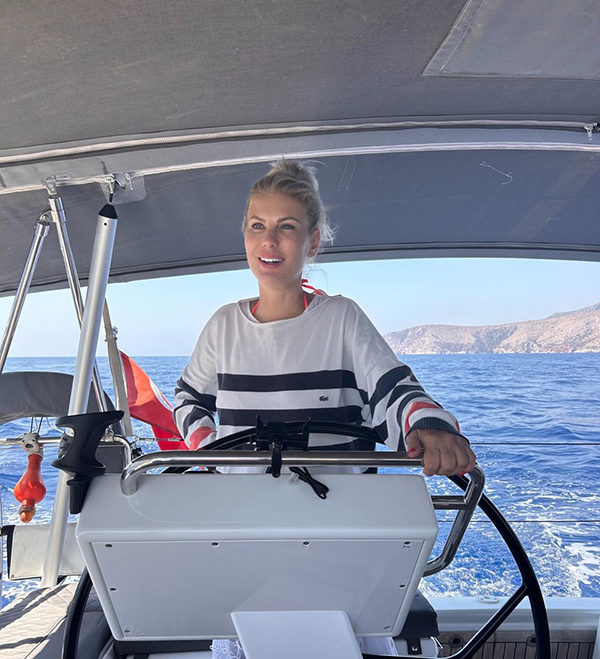
After years of sea journeys on gulets and motor yachts, how did discovering sailing transform you? How did the feeling of moving with the wind change your connection with the sea?
I once wrote about this; being on the sea calms me. For many people, the sea means lying back, enjoying silence, and surrendering to a kind of peaceful stillness. It was the same for me.
When my children were only six months old, I was a mother who introduced them to the sea in Göcek, at Bedri Rahmi Bay. At the age of two and a half, I watched them fish with admiration in those same bays and enjoy the sea. Over the years, whenever we had the opportunity, we always went on boat holidays. About six years ago, during a boat trip, we experienced a minor malfunction. My daughters and I were so calm that the captain came and congratulated us. Their names reflect who they are: Derin and Mavi.
After the comfort and ease of a motor yacht, I realized that a sailboat keeps you constantly alert. While you may drift peacefully at times, you must also know what to do when sudden winds arise. You must understand the wind, make peace with it, and when necessary, lower your sails and retreat. It is both a matter of mathematics and a matter of respecting the spirit of the wind. It taught me patience, staying calm even in moments of crisis, and most importantly, acceptance.
After obtaining your sailing license, you began participating in races and long sailing trophies. What did the racing atmosphere and trophy experience teach you about seamanship and discipline?

The racing atmosphere and trophy experience taught me this: the more prepared you are before going out to sea, the stronger you stand in life.
Did you check every detail of your boat? Did you complete your missing parts? Were you truly able to bring your mind into the present moment? That is exactly what matters. Because the sea does not accept “I forgot”—just like life.
Sailing and seamanship require not only physical preparation but 360-degree awareness. It teaches you to read the wind, to adapt instantly to change, and instead of fighting what you cannot control, to align with it. It teaches patience—waiting and watching for the right moment. Most importantly, it teaches teamwork. Because no success at sea is ever achieved alone.
This discipline brings clarity to a person. It sharpens decision-making skills. In moments of crisis, it teaches you to take action instead of panicking. It deepens your sense of responsibility. Over time, you realize that you are not managing the boat—you are learning to manage yourself. And that mastery does not stay at sea; it carries into the very heart of life.
Being a writer who also participates in sailing races is quite an interesting combination. How do you connect the adrenaline of racing with the imaginative world of storytelling?
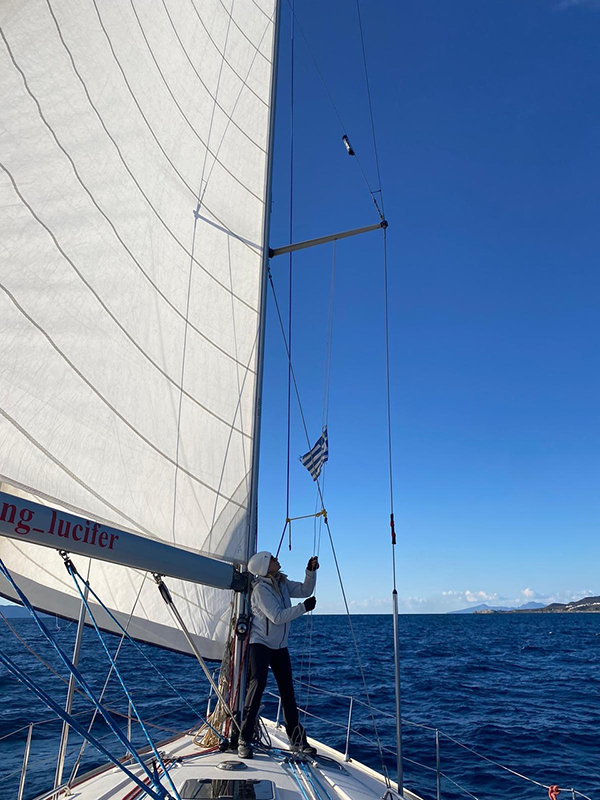
My grandfather was a master storyteller. He wouldn’t just tell stories; he would immerse us in them, make us the heroes, and let us experience all the excitement from within.
The adrenaline in sailing races is so intense that sometimes I feel like the hero riding the legendary Phoenix, the Zümrüdüanka, feeling the wind on my face. Sometimes mythology enters the story; I wish for Poseidon to be in a good mood, sometimes I hear the voices of sirens, and sometimes I imagine myself as one of them… Because the sea is not just a body of water; it is an endless story. Every wave is a new sentence, every shift of the wind is a turning point in the narrative. And we become both the writer and the hero of that story.
During a race, time bends. Seconds stretch, moments deepen. While I am gathering ropes, adjusting sails, and calculating routes, another narrative begins to flow within me. It feels as if an invisible hand is whispering every moment into words in my mind.
Just like in my grandfather’s tales, reality and imagination intertwine. Now, I experience the same thing in the middle of the sea. Yes, I am in a real race, but at the same time, I am also inside an invisible world. The wind has a language, the waves have a memory… As I listen to them, the story writes itself.
Perhaps that is why sailing and writing are not two separate fields for me. One is the adventure I live in the outer world, the other is its echo within me. Sometimes, when the race ends, I realize that what remains is not just a ranking or a result, but a new tale within me—one that smells of salt and is shaped by the wind.
It is often said that time spent on a sailboat gives a person a completely different perspective. What has the sea personally taught you?
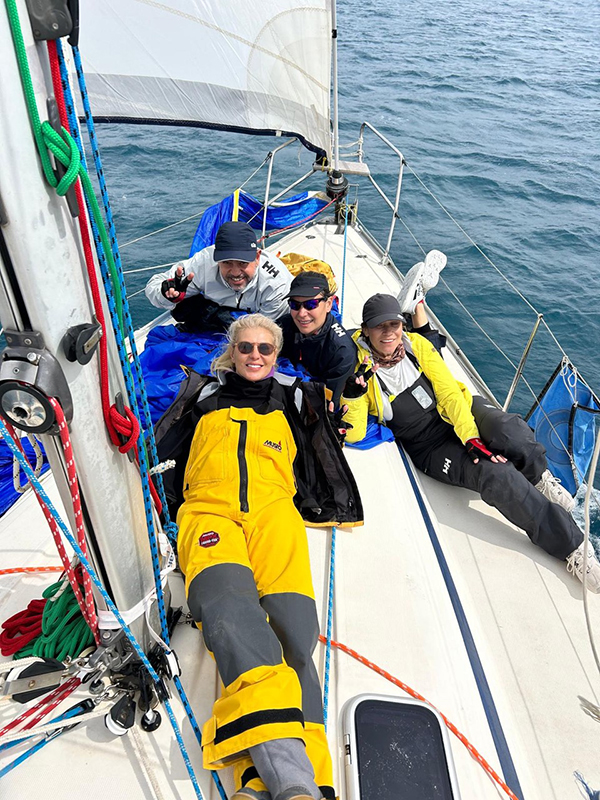
I think it taught me acceptance the most.
I am not someone who gives up easily. In fact, I can say I am quite stubborn. I am calm and a good companion. But accepting and stepping back was not something I was very good at. The sea taught me not to fight the wind. It taught me that sometimes you step back not because you cannot do something, but because you should not. It taught me to wait, to pause, and to experience that moment with serenity.
Is there a moment during a race that you can never forget—one that made you feel the power of the sea or the spirit of teamwork most strongly?
During the fourth leg of the Marmaris Winter Trophy, the weather suddenly became extremely harsh, and we found ourselves in strong winds with the spinnaker up. At one point, we broached so heavily that the boom nearly entered the sea.
Despite the fact that many of our teammates were relatively inexperienced, I can never forget how everyone worked calmly to do what needed to be done. That moment made me realize how important team spirit, trust, and managing adrenaline truly are. Not only I, but the rest of the team felt the same during that race.
The next day, although the weather was still rough, the team was much calmer because they had experienced those conditions the day before. With greater confidence in each other, we successfully completed the challenging course.
Team harmony and communication are very important in sailing. What has being part of a team taught you about human relationships?
I am essentially a communicator. Through my profession, both on television and in my training sessions, I talk about the defining power of communication in our lives and the nuances of building healthy connections.
Even when people in a team do not know each other, I naturally observe how communication forms between them and willingly step in to strengthen that bond when necessary. Because I know that well-established communication can soften even the most difficult conditions.
However, at sea, the most critical point of this equation is the captain. The way the captain communicates determines not only the route of the boat but also the emotional atmosphere within the team. If the captain builds a relationship based on trust, openness, and inclusivity, there is almost no problem onboard that cannot be resolved.
In this sense, I feel very fortunate. Ahmet’s strong communication skills and natural mastery of human relations create a special space not only for me but for everyone who steps onto our boat. In his presence, people feel valued, safe, and a sense of belonging. This feeling transforms individuals who do not know each other into more than just a team—it turns them into a true family.
I believe one of the most valuable things the sea has taught me is this: the right communication does not only make things easier; it connects people, builds trust, and makes even the most challenging journeys meaningful.
It is said that long hours at sea take a person on an inner journey. As a writer and storyteller, how do you connect with the language of the sea in these moments? How do the stories whispered by the wind, the waves, and the horizon nourish your writing?
If there is anger I need to write, I summon the fiercest winds within me—the kind that strain the mast and make the sails tremble. I think of the waves swelling and crashing into one another, of the sea unable to hide its own rebellion. Because anger is like that; it cannot be suppressed, it must be lived through.
I write the most beautiful sentences of love at sunset. As the sun slowly approaches the horizon, the sky turning into shades of gold and pink, and a gentle breeze passes softly through my hair… In that moment, time seems to soften, and the world turns more gently. Just like love in its simplest and most touching form—it does not rush or shout; it simply exists and makes itself felt.
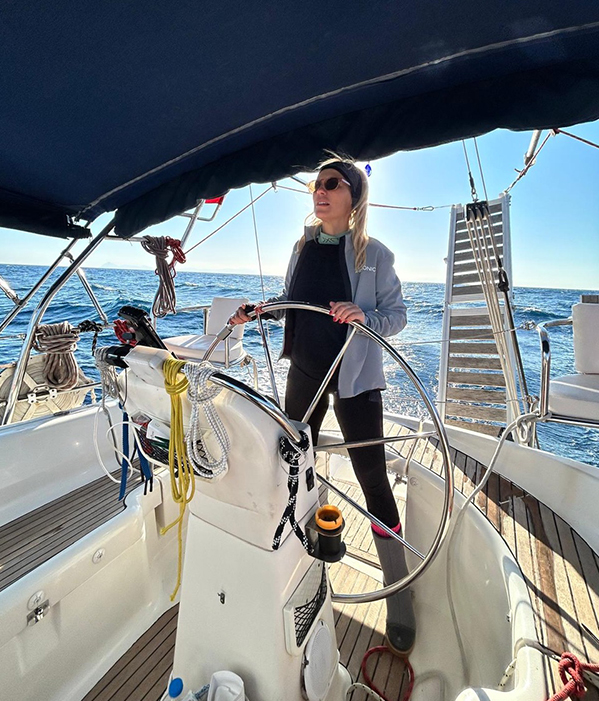
If I want to describe calmness, I take refuge in those still hours when the sea almost stops breathing. The water carries the sky like a mirror; nothing rushes, nothing is lacking. In that stillness, one hears their inner voice more clearly. Perhaps that is what we call peace—feeling complete without needing anything to change.
If I need to tell a childlike joy, I call upon the dolphins—the free spirits that suddenly appear, accompany our boat, and seem to race with us. That pure joy rising from the water… In that moment, the heart becomes lighter for no reason, and one simply wants to smile.
Because at sea, every emotion has a counterpart. Every feeling finds a body somewhere in nature. And when I write, I do not summon words—I summon the traces those moments have left within me. Each time, I realize that the sea is not just a view; it is the oldest and most honest storyteller of emotions.
Sailing requires discipline, patience, and strategy. Do these qualities reflect in your daily life and writing process?
Writing is, first and foremost, a matter of discipline. Waiting for inspiration may be romantic, but real writing begins the moment you sit down and commit to staying there. It is said that Haruki Murakami wakes up at 5 a.m. every morning and writes for five hours before continuing his day. This always reminds me that writing requires loyalty more than inspiration.
For me, the most fundamental principle of writing is creating that space for myself—sitting in front of the computer, silencing the rest of the world, focusing my mind on a single point, and staying there for at least two hours, no matter what. Because the real text often emerges not in the first sentences, but after that resistance is broken.
Strategy, on the other hand, is the invisible architecture of the work—establishing the flow, connecting parts in the right places, adjusting the rhythm, and feeling a strong ending from the very beginning. Just like plotting a route in advance.
The connection between sailing and writing lies exactly here. When I am at sea, all my focus is there—the direction of the wind, the balance of the boat, my focus on the bow… Everything requires immediate attention and strategy. But the moment we anchor, I shift into a completely different rhythm—that becomes my writing time.
At that point, one of the most beautiful balances of life comes into play. Ahmet leaves me alone with myself; I retreat into the world of words, and he continues with the rhythm of the boat. We give each other space. Because in the sea, in life, and in creation, one of the most valuable things is being able to create that space.
Discipline is not just an obligation—it is a space of freedom. The more disciplined you are, the deeper and freer you become.
Both writing and the sea whisper the same thing: focus, be patient, feel the rhythm… The rest comes naturally.
What would you advise those who are new to the sea and interested in sailing? Especially, what can be done to make women more visible in this sport?
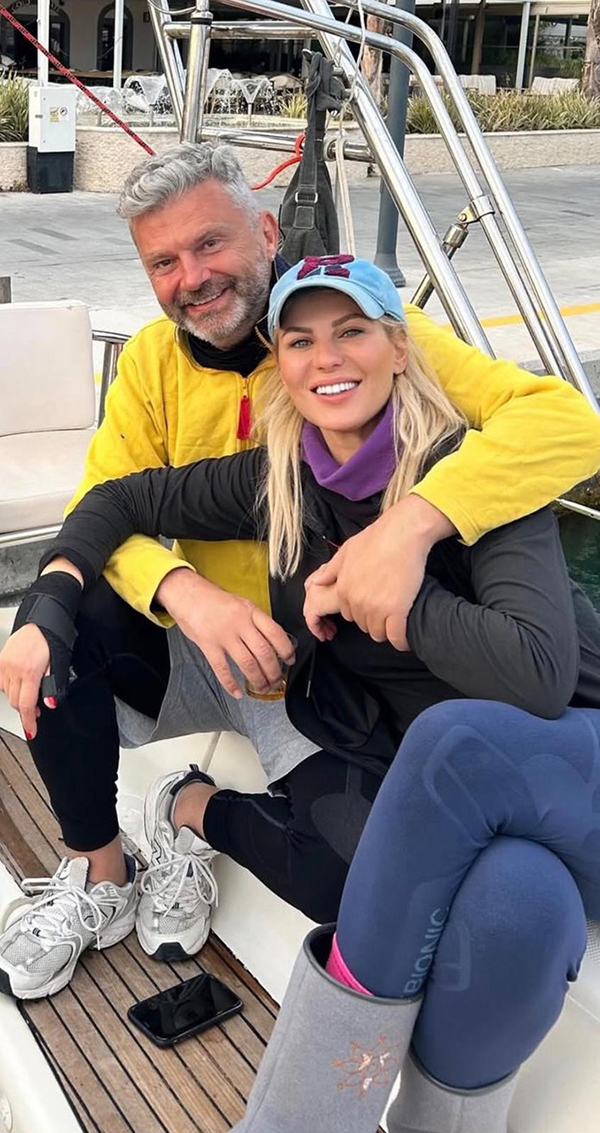
Believe it or not, a large part of our crew consists of women sailors. This makes me incredibly happy. Most of them are new to the sea and sailing—yet they are curious, eager to learn, and determined to improve. This courage and curiosity are truly inspiring.
My first advice to anyone new to sailing is this: approach this sport with respect. The sea does not like to be underestimated. Before participating in races, it is essential to receive proper training. Unfortunately, many people think this process is as calm as it looks from the outside—a gentle breeze and a pleasant ride… But the reality is very different.
Joining a sailing race without understanding a sailboat is as unrealistic as entering a motocross race without knowing how to ride a motorcycle. Sailing requires technical knowledge, reflex, attention, and teamwork. That is why one must first learn, then experience.
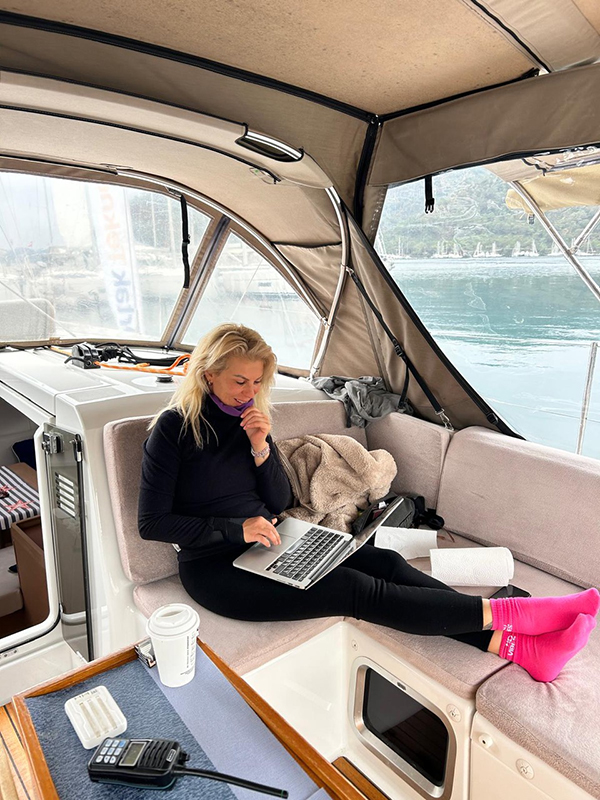
As for women’s visibility, I believe the most important factors are courage and creating space. As women connect with the sea, take the helm, and feel the wind, that visibility naturally grows. Just like on our boat… With a supportive team, an inclusive environment, and a non-judgmental learning process, women develop quickly and establish a strong presence.
The sea does not discriminate. It welcomes everyone equally who opens themselves to it, who is willing to learn, and who puts in the effort. As women continue to hear that call, I believe they will become much more visible and influential in this field.
Finally, as both a writer and a sailor: for you, is sailing a sport, a lifestyle, or an endless story?
For me, sailing does not fit into a single definition.
On one hand, it is a serious discipline—a sport that engages your body, mind, and reflexes all at once. But over time, it becomes something more.
Sailing turns into a way of life. You learn to read the wind, to be patient, to wait, to act at the right moment… Instead of fighting what you cannot control, you learn to align with it. And of course, these lessons do not remain at sea; they settle right in the middle of your life.
But for me, its deepest meaning is this: sailing is an endless story. Every route is a new beginning, every race a new narrative, every change in the wind like a sentence that alters the course of the story. And you become both the writer and the hero of that story.
Perhaps that is why, every time I go out to sea, I feel the same thing: I am not going somewhere - I am stepping into a new story.
We would like to thank you for taking the time to speak with us despite your busy schedule.
Reportage: Banu Demir / The Sailor’s Newspaper
Photographs: Derya Özel Archive
Prepared for Publication: Doruk Agency / Founded by Sailor's Newspaper