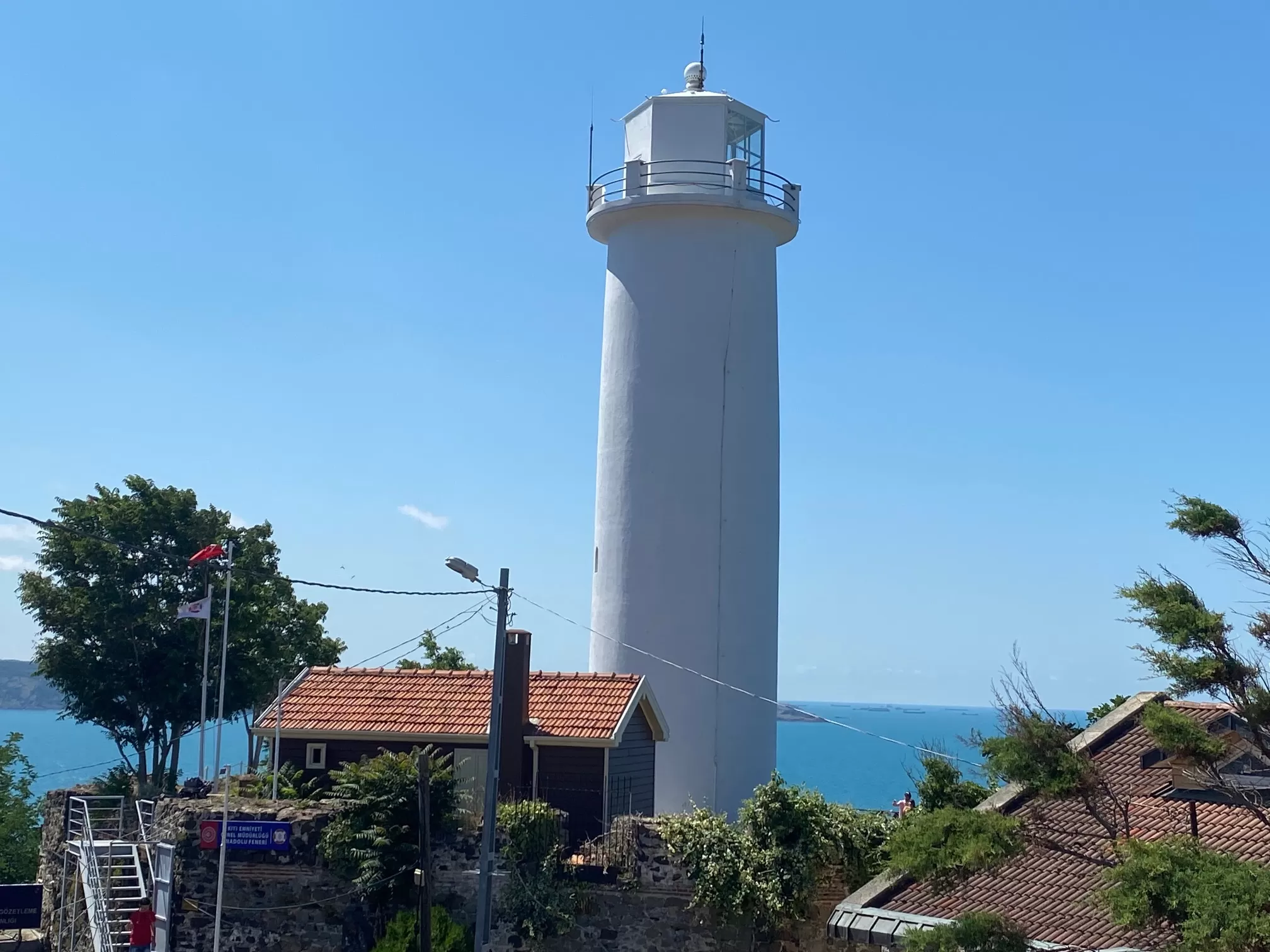
In my previous writings on sailing, I focused more on its class codes and social manifestations. This time, I want to turn the helm inward - to the most intimate and vulnerable place of a human: the mind. What are we truly seeking when we follow sailors like Özkan Gülkaynak, Erik Aanderaa, or the Alluring Arctic crew? Is it an escape, or a search for that simple and lucid state that modern life has lost amidst its abundance?
Scarcity: The Mind’s Clearing Ground
Scarcity is often narrated as a form of deprivation. Yet, on a small sailboat, scarcity is the liquidation of the excesses that clutter the mind. Space is cramped, water is limited, and energy is measured. These physical constraints create a mental order. The attention, fragmented by thousands of trivial decisions in urban life, enters a narrow but clear field of focus at sea.
This is precisely what we observe in the discipline of the Alluring Arctic team navigating high latitudes, or in the composure of Allison & James living in confined quarters. As options diminish, mental noise fades. Decision fatigue gives way to the simple and holistic rhythm of survival.
The Materialization of Fear and Repair
One of the greatest psychological burdens of the modern individual is “floating anxiety”- fears with no clear object. Fear of the future, status, or uncertainty is abstract, and therefore paralyzing. At sea, however, fear is tangible and honest.
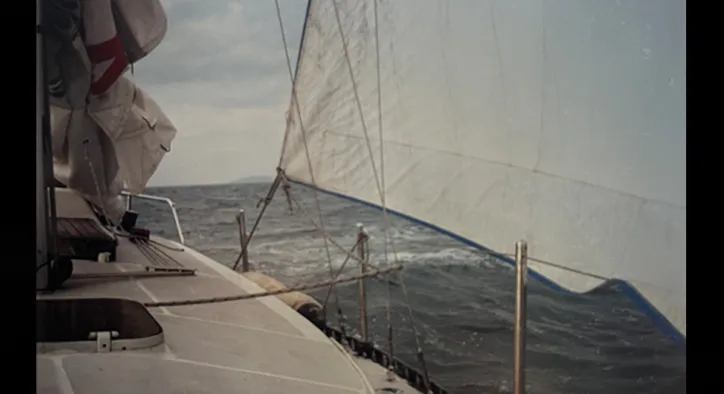
When Erik Aanderaa sails into a storm, he forces the mind to face what it usually avoids. This is not a mere challenge; it is a state of conscious "exposure." When the wind picks up, the actions are clear: reef the sails, check the course, keep the boat upright. When abstract anxiety transforms into concrete fear, the mind does not freeze; it functions. When the sailor emerges from the storm, they have repaired not only their boat but also their own internal balance.
The Different Solitudes of Solo and Couple Sailing
Solo sailing - as seen in the voyages of Özkan Gülkaynak or Erik Aanderaa - is a state of psychological "mirrorlessness." A solitude devoid of social validation, gazes, and labels. Being able to remain honest in the middle of the ocean when no one is watching means the gradual shedding of false identities and social masks.
In contrast, the long passages of couples like Allison & James or Juho & Sohvi rely on a delicate balance established in a confined space. Here, the relationship is less of a romantic narrative and more of a practical exercise in collective survival. Egos are smoothed over, responsibility is shared, and consent is renegotiated every day. The small boat becomes a laboratory that makes all the hidden cracks of a relationship visible.
Conclusion
Why do people try to fit their lives into a small boat for years? Perhaps it is to fill the inner void created by modern life’s promise of "more" with the scarcity imposed by the sea.
Going to sea is less about changing geography and more about the practice of stripping away the identities imposed upon us. in that cramped cabin, facing the wind and the water, "being right" becomes meaningless. All that remains is the person themselves. Because at sea, one learns not what they want to be, but what they can live without.
The Youtube Channels Mentioned are:
Alluring Arctic Sailing (Juho & Sohvi) @AlluringArctic
Özkan Gülkaynak @gulkaynakozkan
Allison & James @AllisonandJamesSailing
Erik Aanderaa @erikaanderaa
Guest Author: Alper Demir
Photograph: B. Hulusi Gürbüz
Prepared for Publication: Doruk Agency / Founded by Sailor's Newspaper