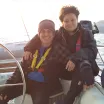
Could you briefly introduce yourself? How did your connection with the sea begin?
I graduated from the Faculty of Fine Arts at Marmara University. Although I spent many years working in the fashion design industry, I never distanced myself from painting. I have participated in numerous exhibitions and held my first solo exhibition while travelling in Vanuatu.
My connection to the sea started when I spent my summers by the water and discovered my grandfather’s passion for fishing. I first encountered a sailing boat during my middle school years in Göcek.
How did the sea gradually turn into a way of life for you?
My love for the sea was always within me. I always carried dreams that did not seem very realistic at the time.
As a skipper, what has challenged you the most, and what has strengthened you the most?
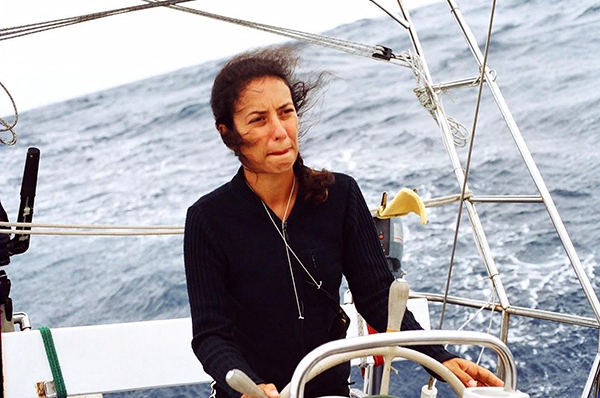
The most challenging aspect is the male dominance that exists in sailing, as in many other fields in our country. Unfortunately, this discourages many women. I know numerous female sailors who carry the entire responsibility on board, yet their names are rarely mentioned. Perhaps my rather tough temperament has protected me from being affected by this reality.
Long ocean crossings, harsh weather conditions, and opposing currents require nerves of steel. I believe nature itself is what strengthens you. When people enter the equation, things often turn into ego battles—and that’s when it becomes ugly.
What does leadership at sea mean to you? How would you describe your approach?
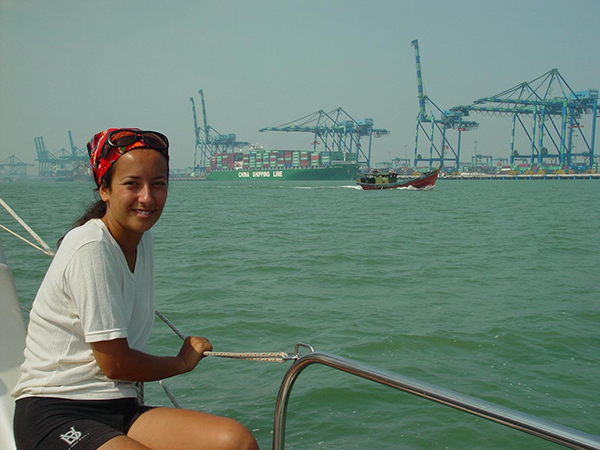
The trust I see on people’s faces during the trainings I give makes everything run more smoothly. My approach is very clear and direct. On a sailing yacht, people must understand the damage a loaded winch can cause, or what a boom can turn into during an uncontrolled gybe.
Do you remember your first serious sailing course?
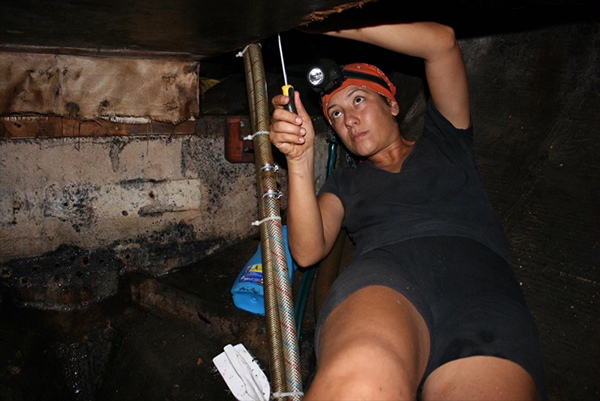
I could never forget it. We were stranded in Bora Bora due to headwinds. After a month, we finally set sail toward Western Samoa. We reached Apia Harbor, 1,200 nautical miles away, in 12 days. The yacht had been on land for years with rainwater accumulated inside, which caused numerous technical problems during the sailing course.
What kind of reactions do you encounter as a female skipper? How do you see the role of women evolving in this field?
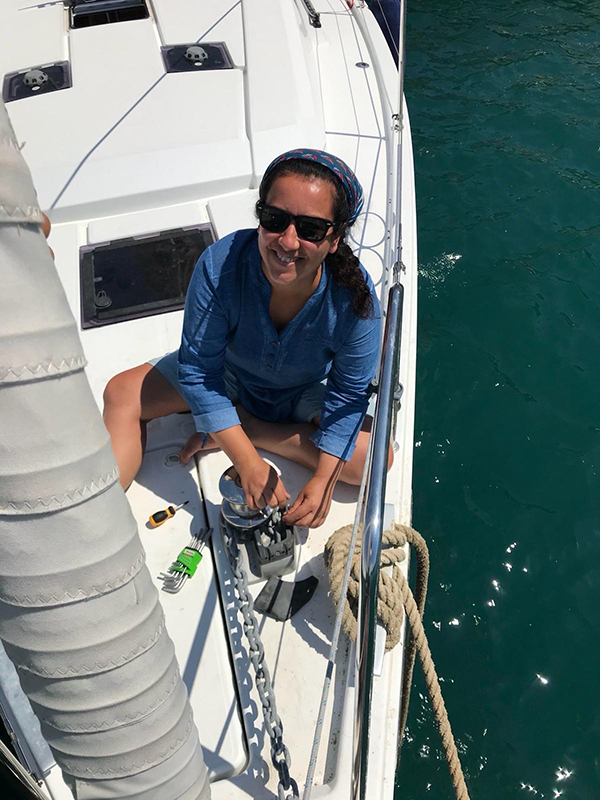
As I mentioned earlier, male dominance makes things rather unpleasant. On the other hand, women’s reactions are incredibly positive and full of appreciation. I have met many female captains who were far stronger and more successful than their male counterparts. Unfortunately, I do not believe women’s roles in this field will significantly develop within this society. My only advice is to follow their dreams and ignore the imposed order.
What do you pay the most attention to during long passages? Do you have any non-negotiable rules at sea?
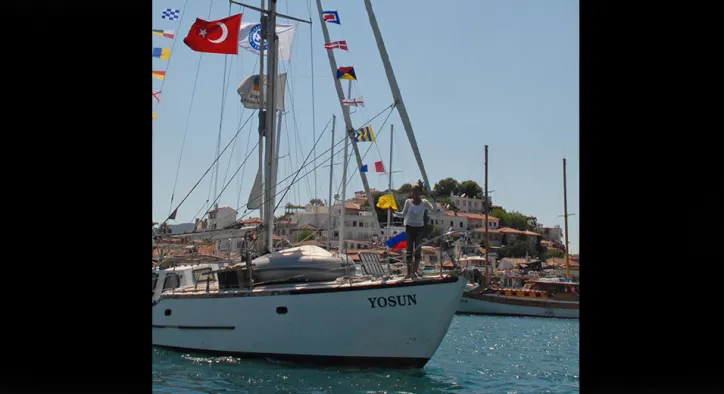
Safety comes first. The boat must be fully maintained and checked. Failures are inevitable, so it is essential to be prepared. Nutrition and health are equally important. When I see a storm approaching, the first thing I do is make sure I have easy-to-eat food to hand. I’ve been through storms that have lasted for days, and in that chaos, a sandwich pulled from your pocket can be a lifesaver. Provision planning is also crucial. In the Red Sea, we were once stranded in a marina with twenty other boats for twelve days. Some of the boats had run out of food, so I supplied them from my own boat, Yosun.
What does an “ideal route” mean to you? Peace, adventure, or a balance of both?
For me, the ideal route is one that does not challenge or defy the sea and nature.
How does your maritime experience reflect in your art? Through colors, light, or emotions?
My passion for the sea and painting intertwines. The colors always find their way to blue.
You are involved in both art and design. How do these fields feed your sailing experience?
During storms, I watch the turquoise tones in breaking waves. I observe and rejoice in the color refractions of sunlight hitting the ocean. Art does not nourish my sailing—but the sea offers me an artistic feast.
What emotion dominates when you sail alone?
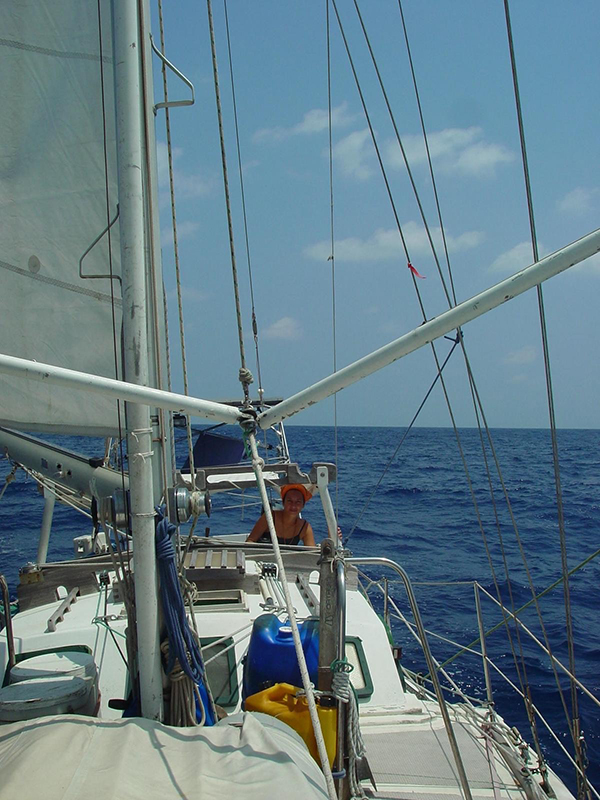
It is a feeling I wish everyone could experience at least once in their lifetime. I cannot fully describe it, but it is very close to the concept of freedom.
Which bay or route along the Turkish coast has impressed you the most?
Heybeliada, Çam Harbour. I built all my dreams on that bay.
Could you share a moment when you thought, “This is why the sea is my home?''
I am at sea every moment.
What maritime projects do you plan to pursue in the near future?
I am planning several painting exhibitions. In the long term, I am considering a solo circumnavigation of the world.
Thank you for taking the time to speak with us despite your busy schedule.
Reportage: Banu Demir The Sailor’s Newspaper
Photographs: Yeşim Tokol Archive
Prepared for Publication: Doruk Agency / Founded by Sailor's Newspaper