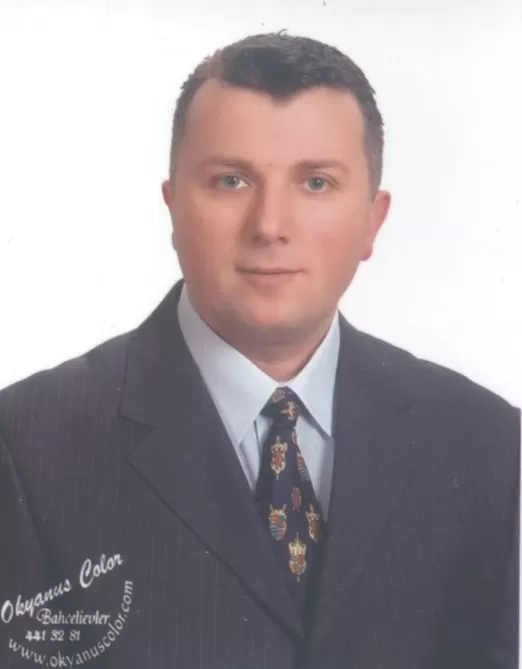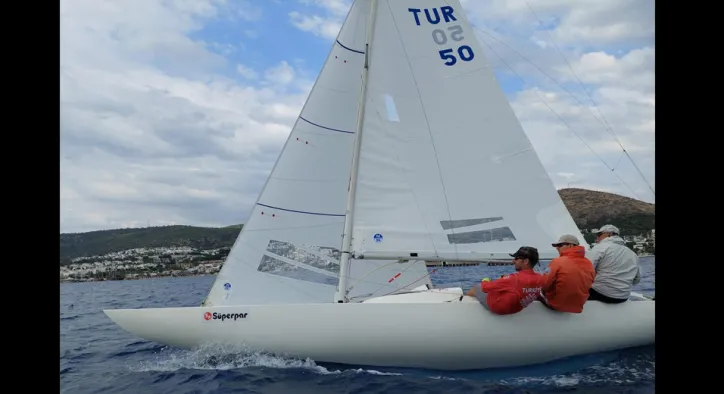
In fact, the motivations that kept me involved in this sport have changed over time. I started sailing in 1991 at Istanbul Sailing Club. During the summer school program, a natural love for sailing developed, of course; but honestly, my initial motivation as a young aspiring sailor was simply to experience club life and enjoy the friendships I found there. That atmosphere formed the foundation of my desire to continue sailing.
Today, I observe that children - who are under an intense pace starting with the education system and extending into their social lives - are not able to experience club life in the same way as before. When I first started sailing, sailors of all ages would spend time together at the club from early in the morning until late at night. Nowadays, I see that especially beginners tend to be at the club only during training hours. Within this busy structure, I feel that the club culture and social environment - something I loved deeply and still feel grateful for, especially at my club - cannot be experienced as fully as it once was.
The year I started sailing at Istanbul Sailing Club was also the first year that summer sailing schools began charging fees. Despite that, there was still a structure where children from all backgrounds could start sailing regardless of their economic situation. Because boats and all the necessary equipment were provided by the clubs, the sport was much more accessible. Today, however, the sailing experience is quite different. I do not see this as a criticism, because under today’s conditions it is neither possible nor sustainable for clubs to provide that level of support. Nevertheless, I believe it is important to recognize how much the system has changed.
Over time, as I learned and improved in sailing, a performance-oriented mindset began to take its place alongside the sense of friendship. Both in my athletic career and in my professional life, I have always fought hard to succeed, in parallel with the demanding dynamics of the sport. I have always worked to achieve more and to become better. That has been my strongest source of motivation.
Which transition in your journey - from being an athlete to becoming a coach, and then moving into management -transformed you the most?
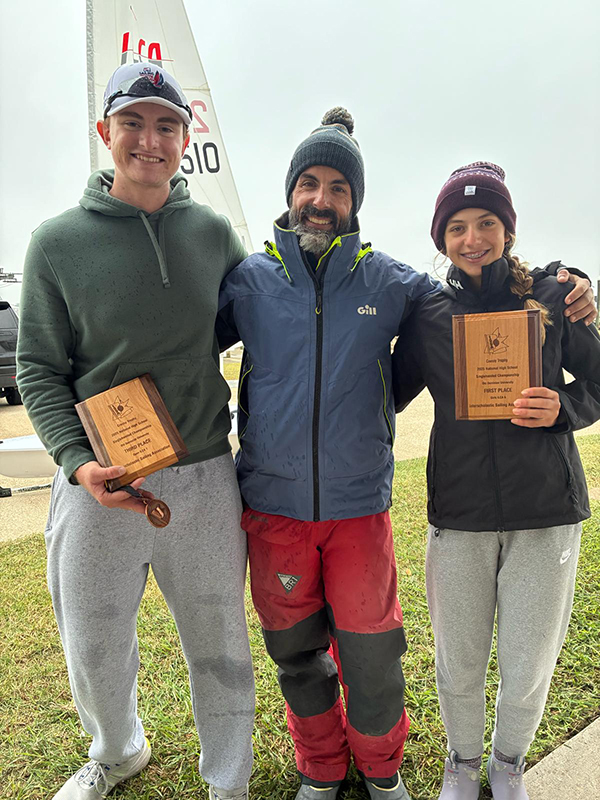
I can say that being in the right place at the right time played a decisive role in shaping my career. From my childhood years onward, spending every day at the club and sharing the same environment with some of the most distinguished sailors whose names are written into the history of Turkish sailing fundamentally changed my perspective on the sport. The conversations held in the club environment and the experiences shared there provided me with a depth of knowledge that, today, I realize would be very difficult for someone outside that environment to acquire at the same level.
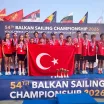
In 1995, finishing third at the Balkan Championship held in Romania earned me the right to enter Marmara University’s School of Physical Education and Sports without an entrance exam. At that time, sailing was not offered as a specific discipline within sports academies, so in order for sailors to be admitted they had to outperform athletes from other national sports such as basketball and volleyball in the entrance examinations. This achievement became an important turning point in my life, allowing me to see sailing not merely as a hobby but as a potential professional career path.
Following this period, another important development took place at the Istanbul Sailing Club. Under the leadership of the club’s president at the time, Mehmet Adakan—whom we recently lost and whose passing I deeply mourn—a significant first for Turkish sailing was realized. In
During this period, concepts such as goal setting, measurement and evaluation, performance criteria, planning, and systematic analysis moved beyond theoretical frameworks for me and gained direct practical meaning. I can comfortably say that many of the most important gains in my career came during this time. At the same time, extensive international travel and the opportunity to observe practices in different countries firsthand transformed my perspective on sailing. I began to approach sailing as a performance sport grounded in scientific principles.
This disciplined approach helped me achieve sustainable success not only in sports but also in every professional role I later undertook.
Throughout this process, I also observed that many professionals working in sailing in Turkey— from beginner training programs to competitive racing levels—faced significant gaps in educational infrastructure and methodological consistency. This realization helped me see that I could create a meaningful and lasting impact in this area. From that point forward, I made it a central objective of my work to apply a holistic perspective aligned with scientific principles— ranging from program design to measurement and evaluation—across all areas, including national team coaching, performance sailing, sailing school management, and youth development training models.
Supported by the East German training methodology that influenced my education, I focused on developing a flexible yet systematic model that could guide the development of athletes at different levels. Over time, this approach became one of the fundamental building blocks that enabled my transitions into different roles. I adopted a working philosophy centered on continuous research, learning, and implementing improvements and innovations at both the individual and systemic levels.
How would you describe the period when you served as Sports Director at the Turkish Sailing Federation? What was the heaviest responsibility you carried during that time?
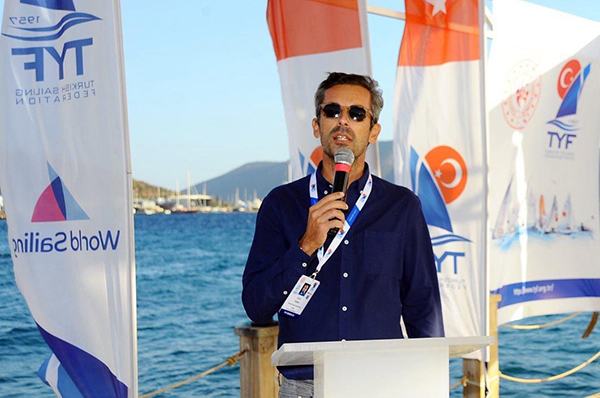
Since my childhood, the Turkish Sailing Federation has held a very special place in my life—a place where I felt I belonged, a place every sailor should hold dear. Throughout my years as an athlete and coach, the Federation invested in me, giving me the opportunity to see the world and develop myself, and for that, I have always felt a deep sense of responsibility.
I have always believed that sailing must be managed in the best possible way and that our sailors should feel a sense of belonging to the Federation, the institution that sets the rules. In my role as Sporting Director, I tried to bring this approach to the field. From ensuring clear and reliable selection criteria to the digital transformation of registration, budgets, schedules, and training models; from standardizing and improving the quality of our camps and national activities, I was directly involved in many areas.
I worked to support our coaches’ development and ensure they received the respect they deserve, while keeping the athlete at the center. My goal was to build a system where the services provided to the athletes are not a luxury, but a right.
Of course, this process was challenging and intense, and my responsibilities were very broad, so it is hard to single out just one area. However, I hope that, by making a meaningful difference, I was able to create systemic improvements. Thinking back on it all, I smile; I hope my work has contributed positively to Turkish sailing.
I should also mention that the vision and support of the president, vice-president, and management team during my tenure enabled us to implement lasting systemic changes in many areas.
What did it mean for you to serve as the team leader at the Tokyo 2020 Olympics? Looking back today, how do you evaluate that process?
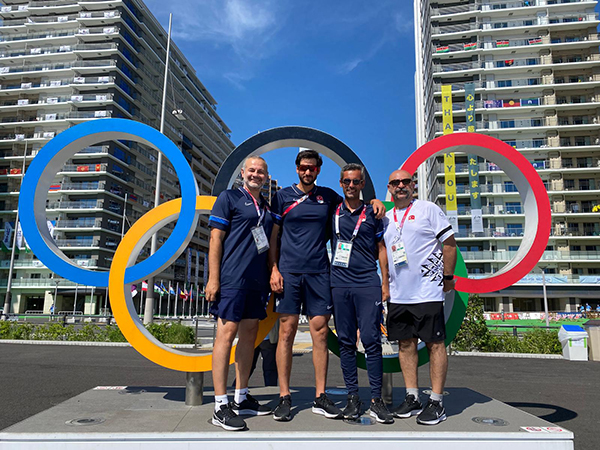
The Olympics represent the most physically and psychologically demanding experience a athlete can have, while also requiring the highest standard of excellence. Ensuring that this experience is conducted according to modern sporting criteria largely falls under the responsibility of sports administrators. With this awareness, as a sports manager who can also maintain a strong athlete perspective, I worked tirelessly day and night to provide our athletes with an environment where they could realize their full potential.
Life, however, went beyond the planning challenges of a typical Olympics. The Tokyo Games, postponed by a year due to COVID-19, presented one of the most operationally challenging events in history, requiring logistics and performance planning to be repeatedly redesigned according to constantly changing conditions. Alongside intense coordination with our Olympic Committee and Ministry of Youth and Sports, we held countless late-night meetings with World Sailing. There were moments when I was physically and mentally exhausted, even feeling hopeless at times.
When our containers were en route, a ship accident in the Suez Canal caused the canal to close; the Olympic Village was two hours from the race course and summer traffic was heavy; and accommodations we had painstakingly planned for our athletes were suddenly restricted by the IOC to only “COVID-approved” hotels… I will never forget that moment.
Yet, in exchange for our Olympic Village bed allocations, we had secured additional technical staff and vehicle accreditations, taking a crucial step toward creating the ideal performance environment for our athletes. For the first time in our history, each class we qualified in had its own class coach, as well as a strong technical team including a physiotherapist, psychologist, and rules advisor. The pressure and uncertainty I experienced from learning the accommodations were canceled until securing a new reservation are hard to describe.
Thanks to advance information before official announcements, we managed to secure a
Compared to countries with traditionally strong sailing programs and large budgets, we were able to offer our athletes very good conditions and represent our country effectively. Looking back, I can say that the effort I put in, the responsibilities I carried, and the collective dedication we demonstrated will remain one of the proudest experiences of my life.
Statistics play a crucial role in sports science. We entered the 2020 Summer Olympics as a team with statistical medal potential. In the early days, our athletes were within medal contention. Despite achieving the best results in our history, we completed the Olympics without winning a medal. I still feel the disappointment, as multiple athletes had the capacity to achieve it.
I try to balance this feeling internally with the belief that I provided our athletes the best possible performance environment. Supporting my country, Turkish athletes, our federation, and our valuable athletes will remain one of the greatest sources of pride I carry throughout my life.
How has your specialization in sailing schools and camping programs shaped your perspective on the sport’s infrastructure and athlete development?
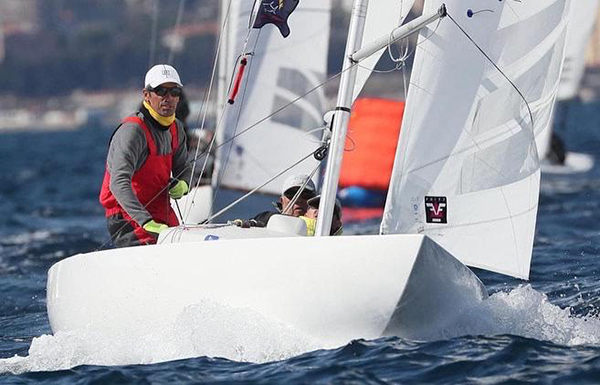
As I have mentioned before, early in my career I observed significant gaps in the educational infrastructure and methodological consistency across the sport, from entry-level programs to competitive levels. In particular, most sailing beginner programs for children aged 6–12 lacked a systematically designed curriculum that was pedagogically sound, age-appropriate, supportive of physical and social development, and included alternative teaching methods.
I found it striking that programs conducted without consideration of children’s physical characteristics, age groups, or social needs - and without proper equipment, materials, or a step-by-step teaching plan - often discouraged more children from continuing sailing than the number of sailors they produced.
A simple observation and calculation showed that in a single boat with 8–10 children, technical skills were not taught securely and progressively; children were put directly into the water and given instructions, and during a full-day program, each child experienced only a few minutes of actual sailing. In this model, the child neither acquired real skills nor became an active participant in the learning process.
Of course, I understand that our clubs may not always have the budget to invest in modern, internationally recognized educational materials that facilitate learning. However, I strongly believe that with a well-designed curriculum and minor structural changes, success rates can be dramatically improved.
When a modern and rational foundational education system is established - where simple, attainable goals are sequenced, one skill is mastered before moving to the next, and children progress while feeling successful - it clearly provides a larger and more qualified athlete pool for high-performance teams. With this perspective, the programs I researched and implemented produced extremely positive results.
My conceptual transformation in this area was significantly influenced by the International Camp Director course I attended under the International Camping Federation in Australia. There, I learned that “program design” must consider planning, staffing, child protection policies, safety, crisis management, and organizational structure together. My success has been rooted in applying this holistic approach to sailing education programs.
A well-designed beginner experience decisively affects whether children continue in the sport. Their love for sailing is directly linked to a structured and safe learning process.
Although the content differs in competitive athlete development, the foundational structure remains the same. It is essential that athletes are actively involved in performance planning; that short-, medium-, and long-term goals are clearly communicated; that language is carefully chosen; and that athletes understand why and how the process is progressing.
In my view, performance development is centered on the athlete’s constant awareness of their strengths and areas for growth, clearly defined goals, and their mental engagement in the process.
While holding critical positions at the federation level in Turkey, what structural and professional reasons led you to continue your career in the United States? Was this decision a turning point for you, or a natural continuation of your path?
Holding critical positions at the federation level in Turkey allowed me to gain invaluable experience in my career, and I can say that I was genuinely happy in my country. However, when I decided to continue my career in the United States, my decision was guided entirely by both professional and family considerations.
First of all, I have an 8-year-old daughter, and providing her with the best possible future goes beyond just academic or athletic education; it should also include opportunities to see the world, experience different cultures, question, and develop her own vision. My own life was profoundly shaped by being in different countries and experiencing new cultures through sailing, and I want to pass on the perspective this gave me to my child - to raise her as an independent thinker and a global citizen.
Professionally, the systems and methods in the United States offer me new perspectives on sailing education and athlete development. While I bring valuable contributions from my own experience, the insights I gain from these systems are equally significant. Even though I was happy and productive in Turkey, taking advantage of these opportunities stemmed from both my personal growth and my continuous desire to move forward.
In conclusion, this was not a turning point; rather, it was a conscious and natural step that shapes both my family’s and my career’s future.
How did working in the United States transform you both professionally and personally as a Turkish sailing professional? When you look back today, what are the main gains or experiences that make you say “I’m so glad I did it”?
Working as a program director and head coach at a sailing club in the United States may seem like a “lower-level” position in terms of the trajectory of my career, as I already had the experience and qualifications to contribute far beyond the scope of this role. However, from a professional standpoint, it was an extremely valuable opportunity for me.
This position allowed me to share my own experiences in sailing education and athlete development, while also providing the chance to directly observe and apply the training and management models used in the United States. I also wanted to take the opportunity to translate the methodological knowledge and infrastructure experience I had gained in our own programs into a more systematic, measurable, and sustainable framework.
When you compare the sailing systems in Turkey and the United States - regarding athlete development models, coaching approaches, and management culture - where do you think the most fundamental differences begin?
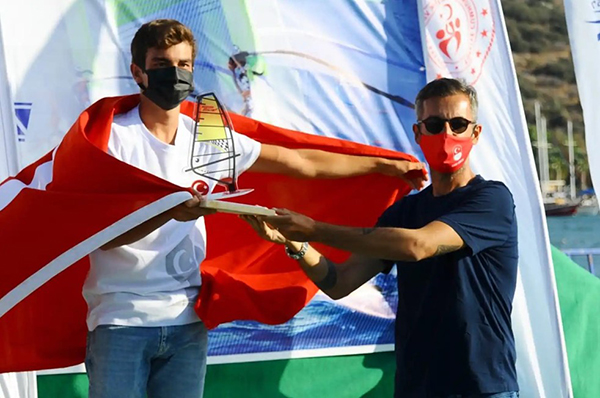
We are talking about two completely different systems; this difference is a deep one, extending from entry-level sailing to Olympic success. Last year, I wrote an article examining the relationship between Olympic success and countries’ economic development. As I noted in
The sailing system in the United States operates differently from other sports as well. To summarize briefly, US Sailing – the American Sailing Federation – plays a completely regulatory role. In youth classes, the federation provides no financial support for equipment, preparation, or participation, even for events where the nation is represented, such as World and Continental Championships. All of these expenses are covered by the families.
In Turkey, however, athletes selected from youth classes to the national team receive substantial support from the federation throughout their preparation. National team camps, and, depending on the class, all expenses for international preparatory competitions as well as European and World Championships are covered by the federation.
There is no single “correct” approach to sports management; each country must develop a tailor-made system according to its own dynamics. So while a direct comparison may not be entirely fair, one reality remains: the transition from youth classes to Olympic classes is the biggest challenge in every country. This is also a problem in the United States, since sailing, like many other sports, is not professional and does not generate significant income, and athletes have to dedicate their most valuable years to academic development.
The education system does not make it easy to integrate sport and education here; however, the value and respect given to an Olympic athlete are much higher compared to Turkey. In short, the country’s GDP, education system, and cultural differences shape the sailing infrastructure and athlete development processes. Clearly, these factors form the foundation of the fundamental differences.
How did the experiences you gained at the federation level, as both an administrator and a coach, reflect on the field, on the boat, and with the athletes? How did these two roles complement each other?
In life, I believe that if you haven’t gained experience at all levels of a job, your chances of being successful are limited. In this sense, I consider myself lucky, because I have worked in every possible area, starting from being an instructor at summer schools, always asking myself, “How can this be better?” I put in the effort, made mistakes, noticed and corrected them before anyone else. I tried repeatedly and worked very hard.
This process allowed my federation and field roles to complement each other. The experiences I gained as a sailing school instructor on the water informed my work at the federation, and conversely, the experiences I gained at the federation translated back to the field. For example, a coach who has never competed in a class cannot have the same level of detail knowledge about that boat class as a coach who has raced in it. Being able to anticipate problems, plan solutions in advance, and maintain a clear perspective has been hugely beneficial in my career and significantly reduced the likelihood of mistakes in my work.
Throughout your career, you have been in positions very close to both success and pressure. What was the most challenging factor for you when making difficult decisions?
I can say that my entire life has been lived under pressure. Performance sports, especially at the Olympic level, are by their nature constantly demanding. As in all sports, managing emotions is as important as physical performance - not just for athletes, but for coaches and administrators as well.
The dynamics of sailing further amplify this pressure. In management roles in particular, the scope of responsibility is extremely broad, spanning human resources, logistics, equipment, and international events. In a structure with so many variables, difficult decisions are inevitable.
For my part, I found the solution in systematization. To avoid being overwhelmed by tough decisions, I tried to define processes clearly from the outset, minimize personal influences, and anchor decisions as much as possible to rules. Naturally, there were moments when I had to make very difficult decisions; however, my trust in systems helped minimize both their number and impact.
In Turkey, one sometimes encounters situations where even matters that should be straightforward and beyond interpretation require judgment calls.
These experiences taught me that establishing clear and transparent systems, which reduce room for interpretation, both lowers pressure and strengthens the decision-maker.
What challenged me most in making tough decisions was not the technical correctness of the decision, but its impact on people. Still, I firmly believe that decisions made fairly, transparently, and within a predefined system build long-term trust.
How has seeing your daughter grow up with sailing and actively participate in the sport influenced your perspective on sailing? As a father, what does it feel like to watch her journey on the boat?
My daughter really enjoys sailing with me in small boats, and on yachts we sail together as a family with her mother joining us. Being on the same boat as a family and spending time together on the water is very precious to us. She loves the life on the boat; I can see that she truly embraces the wind, the water, and the feeling of being at sea.
However, I would say that her Optimist career is not progressing very brightly at the moment. Naturally, as a father and someone involved in sports, I would like her to become a performance athlete. But when I talk with her, she clearly expresses that she knows this is more my dream, while her own dreams revolve around art and painting. Her clarity in expressing this both surprises and makes me proud.
I try to teach her the importance of balance in life and how engaging in different areas can enrich one another. I emphasize how the discipline of sports can benefit art, and how creativity in art can enhance sports. But, ultimately, an 8-year-old interprets the world to the extent she wants to understand it.
My greatest wish is that, regardless of whether she becomes a competitive sailor or not, she loves being on the water and finds peace sailing alone at some point in her life. Her connection with the sea is more valuable to me than any medal. I hope we can achieve this. I will never stop trying, but I will continue walking beside her while respecting her dreams.
What would be the clearest piece of advice from your own journey for young coaches and sailing managers in Turkey? Where is your compass pointing for the coming years?
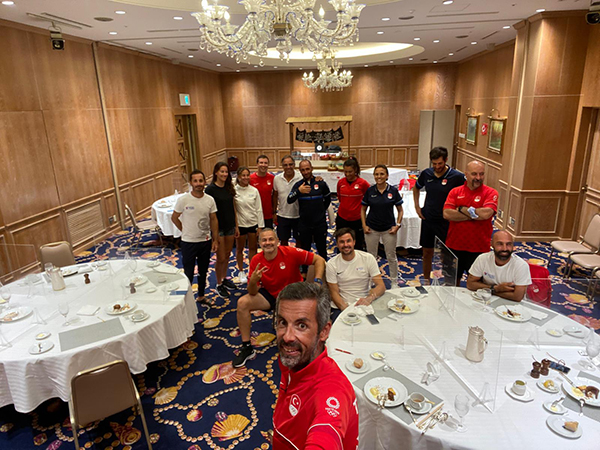
My clearest advice for young coaches and sailing managers in Turkey would be this: they should see this profession not as a “job,” but as a field of expertise and a long-term career. During my time at the Turkish Sailing Federation, I placed particular importance on supporting our coaches and creating the environment they deserved to be respected in. I consistently emphasized that national team coaching should occupy the highest step in this career ladder, and that this role carries both immense pride and serious responsibility.
I believe that the prestige of being in that position must be continuously nurtured through ongoing development. Working harder, researching more, and always setting the next goal a step higher are fundamental requirements of this profession.
For club coaches as well, I believe that reaching the national team level should be a goal - in terms of respect, personal development, and standard of living. However, I want to emphasize that performance coaching is not more important than foundational education. Being an instructor specialized in entry-level sailing is just as valuable as a performance coach. In fact, a foundational education expert working within a well-structured, sustainable, and commercially sound model can contribute greatly to athlete development while also achieving a more balanced and higher standard of living.
Compared to twenty years ago, coaching and sports management in sailing have made significant progress. Yet, except for a few exceptional positions, the profession still does not provide a sustainable and strong economic structure. The main reason for this is directly related to the economic capacity of clubs, sailing centers, and federations, which largely operate with public resources.
I believe that a person’s professional value is directly proportional to the gap they fill and the contribution they make. Rather than waiting, increasing one’s skills, gaining competence in multiple areas, being able to manage multiple responsibilities simultaneously, and creating a profile that truly adds value to the system can make a huge difference. I believe that sailing coaching and sports management will eventually reach the level of income and respect they deserve; but this requires producing more and continuously developing oneself.
My compass for the coming years is quite clear. At present, I maintain a healthy and strong balance between my work environment and family life. I work with wonderful people, in an atmosphere that feels like family, and this brings me great happiness.
A significant part of maintaining this balance is thanks to my spouse’s support. Her understanding and backing allow me to manage both my family life and professional responsibilities in a healthy way. Additionally, having my family in Turkey and their support has always been a great source of strength and security for us.
My compass points to my family, my health, my marriage, and my values. My career goal is to continue adding value to wherever I am, while preserving this balance.
We sincerely thank Fatih Özmen for sharing his experiences - from the behind - the-scenes of sailing to journeys across the ocean - with such openness. It was a truly enjoyable and inspiring conversation.
Reportage: Banu Demir / The Sailor’s Newspaper
Photograps: Fatih Özmen Archive
Prepared for Publication: Doruk Agency / Founded by Sailor's Newspaper